
Sunday, March 31, 2013

Alzheimer's Care Like Walking Backwards with a Blindfold On


Share/Bookmark

Alzheimers Care Like Walking Backwards with a Blindfold On

Thursday, February 28, 2013

Urinary Tract Infections Can Hasten Memory Loss in Alzheimer's Patients


Share/Bookmark

Researchers have found a link between common infections, such as a cold, stomach bug or urine infection and an increase in inflammation like reactions in the brain which lead to an increased rate of cognitive decline. Study results show that people who got an infection had twice the rate of memory loss as people without infections.

By Bob DeMarco 
Alzheimer's Reading Room 

Urinary Tract Infections Can Hasten Memory Loss in Alzheimer's Patients
Bob DeMarco

My name is Bob DeMarco, I am an Alzheimer's caregiver. My mother Dorothy lived with Alzheimer's disease.

This week my mother had her second urinary tract infection of the year. Urinary Tract infections are a problem faced by many Alzheimer's caregivers.

Urinary tract infections are particularly worrisome to me and they should be to most Alzheimer's caregivers.

There is research evidence indicating that infections can hasten memory loss in persons suffering from Alzheimer's. 

Jump to the Alzheimer's Reading Room to continue reading - Urinary Tract Infections Can Hasten Memory Loss in Alzheimer's Patients 

Monday, January 14, 2013

Nutritional Supplement Chiro Inositol May Help Prevent Dementia


Share/Bookmark
“Chiro (Chiro-inositols) is a nutraceutical that we believe sensitizes your brain to the effects of insulin ... This would presumably enhance insulin action and protect the brain from Alzheimer’s.” ~ David Brautigan

Alzheimer's Reading Room
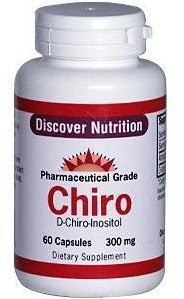
Nutritional Supplement Chiro Inositol May Help Prevent Dementia
We have quite a bit of information available on insulin, the connection between diabetes and Alzheimer's, and ongoing clinical trials into the use of insulin as a treatment for Alzheimer's disease.

You can find all of this information by searching the Alzheimer's Reading Room Knowledge Base.

The study described below was designed to evaluate the effectiveness of chiro-inositol (Chiro) and whether or not it would enhance insulin action as a result protect the brain against Alzheimer's disease.

Chiro-inositol can be found in some foods but it is not usually abundant in most diets. However, Chiro is available as a nutritional supplement.

Is anyone on our list taking Chiro?

Would you consider trying this nutritional supplement?


Tuesday, January 8, 2013

How To Use the Alzheimer's Reading Room Knowledge Base


Share/Bookmark
The Alzheimer's Reading Room Knowledge Base contains more than 4,000 articles. In the Alzheimer's Reading Room (ARR), we offer "real life" solutions to problems that Alzheimer's caregivers and their families encounter each day.

By Bob DeMarco 
Alzheimer's Reading Room

How To Use the Alzheimer's Reading Room Knowledge Base
The goal of the Alzheimer's Reading Roomis to Educate, Empower, and sometimes Entertain Alzheimer's caregivers, their families, and the entire Alzheimer's community.

At its core the Alzheimer's Reading Room is about helping members of the Alzheimer'sand Dementia Community understand, cope, and communicate with persons living with Alzheimer's and Dementia.

The Alzheimer's Reading Room is currently the number one source of information for Alzheimer's, dementia, memory loss, and related health and life news on the Internet.


Thursday, January 3, 2013

Accepting Alzheimers, Coping in Alzheimers World


Share/Bookmark

Did you ever wonder why most Alzheimer's patients stick like glue to their caregiver? Call out their name when they can't see them? Want to know where you are when they can't see you?

By Bob DeMarco
Alzheimer's Reading Room

Accepting Alzheimer's Coping
When a person has Alzheimer's disease or another type of dementia they are often difficult to understand. The behaviors they express are often difficult to accept.

It be be very hard to deal with a person suffering from Alzheimer's disease.

It is hard to understand that a person can't remember. Harder to accept that when they can't remember, they will do things that are completely foreign to your frame of reference.

Each of us has emotions and feelings. Alzheimer's has a way of bringing out the worst of these feelings and emotions.

The challenge -- learning to deal with a person living with Alzheimer's on their own terms. Learning to deal with Alzheimer's disease.

Saturday, December 29, 2012

Matt Damon takes on energy industry with fracking film Promised Land


Share/Bookmark

As one of Hollywood's highest-paid actors with a reputation for straight-talking, he has made little secret of his willingness to confront thorny political and social issues.
Hollywood star Matt Damon takes on energy industry with fracking film Promised Land

Now Matt Damon is facing off against one of America's most powerful institutions - the oil and gas industry - in a film that represents a new battleground for environmentalists' campaigns against fracking.
Promised Land, which goes on nationwide release in the US this week, is set to intensify debate on the controversial drilling technique to such an extent that the industry has prepared a public relations campaign of its own to mitigate the film's impact.

Friday, December 7, 2012

THE EMPLOYMENT SITUATION -- NOVEMBER 2012


Share/Bookmark
Total nonfarm payroll employment rose by 146,000 in November, and the unemployment rate edged down to 7.7 percent, the U.S. Bureau of Labor Statistics reported today. 

Employment increased in retail trade, professional and business services, and health care.


Household Survey Data  
The unemployment rate edged down to 7.7 percent in November. The number of unemployed persons, at 12.0 million, changed little. (See table A-1.)  Among the major worker groups, the unemployment rates for adult men (7.2 percent), adult women (7.0 percent), teenagers (23.5 percent), whites (6.8 percent), and Hispanics (10.0 percent) showed little or no change in November. The unemployment rate for blacks (13.2 percent) declined over the month. The jobless rate for Asians was 6.4 percent (not seasonally adjusted), little changed from a year earlier. (See tables A-1, A-2, and A-3.)  

Saturday, November 10, 2012

Alzheimer's Reading Room


Share/Bookmark

The Alzheimer's Reading Room is the number one source of life news and health information for the entire Alzheimers and Dementia community.The goal of the Alzheimer's Reading Room is to Educate and Empower Alzheimer's caregivers their families, and the entire Alzheimer's community.

About the Alzheimer's Reading Room

Friday, November 2, 2012

Regular Physical Activity Reduces Risk of Dementia in Older People


Share/Bookmark
Study Highlights:
  • Physical activity significantly reduces the risk of dementia in older people.
  • The effect of physical activity remained regardless of age, education or history of stroke or diabetes.
  • Thirty minutes of physical activity three times a week had a significant impact on brain 

EMPLOYMENT SITUATION -- OCTOBER 2012


Share/Bookmark

Total nonfarm payroll employment increased by 171,000 in October, and the unemployment rate was essentially unchanged at 7.9 percent, the U.S. Bureau of Labor Statistics reported today. 

Employment rose in professional and business services, health care,and retail trade.
Household Survey Data  Both the unemployment rate (7.9 percent) and the number of unemployed persons (12.3 million) were essentially unchanged in October, following declines in September.(See table A-1.)  Among the major worker groups, the unemployment rate for blacks increased to 14.3 percent in October, while the rates for adult men (7.3 percent), adult women (7.2 percent), teenagers (23.7 percent), whites (7.0 percent), and Hispanics (10.0 percent) showed little or no change. The jobless rate for Asians was 4.9 percent in October (not seasonally adjusted), down from 7.3 percent a year earlier. (See tables A-1, A-2, and A-3.)  In October, the number of long-term unemployed (those jobless for 27 weeks or more) was little changed at 5.0 million. These individuals accounted for 40.6 percent of the unemployed. (See table A-12.)  The civilian labor force rose by 578,000 to 155.6 million in October, and the labor force participation rate edged up to 63.8 percent. Total employment rose by 410,000 over the month. The employment-population ratio was essentially unchanged at 58.8 percent, following an increase of 0.4 percentage point in September. (See table A-1.)  The number of persons employed part time for economic reasons (sometimes referred to as involuntary part-time workers) fell by 269,000 to 8.3 million in October, partially offsetting an increase of 582,000 in September. These individuals were working part time because their hours had been cut back or because they were unable to find a full-time job. (See table A-8.)  In October, 2.4 million persons were marginally attached to the labor force, little different from a year earlier. (These data are not seasonally adjusted.) These individuals were not in the labor force, wanted and were available for work, and had looked for a job sometime in the prior 12 months. They were not counted as unemployed  because they had not searched for work in the 4 weeks preceding the survey. (See table A-16.)  Among the marginally attached, there were 813,000 discouraged workers in October, a decline of 154,000 from a year earlier. (These data are not seasonally adjusted.)  Discouraged workers are persons not currently looking for work because they believe no jobs are available for them. The remaining 1.6 million persons marginally attached to the labor force in October had not searched for work in the 4 weeks preceding the survey for reasons such as school attendance or family responsibilities. (See table A-16.)  Read more details and the breakdown at the Bureau of Labor Statistics